
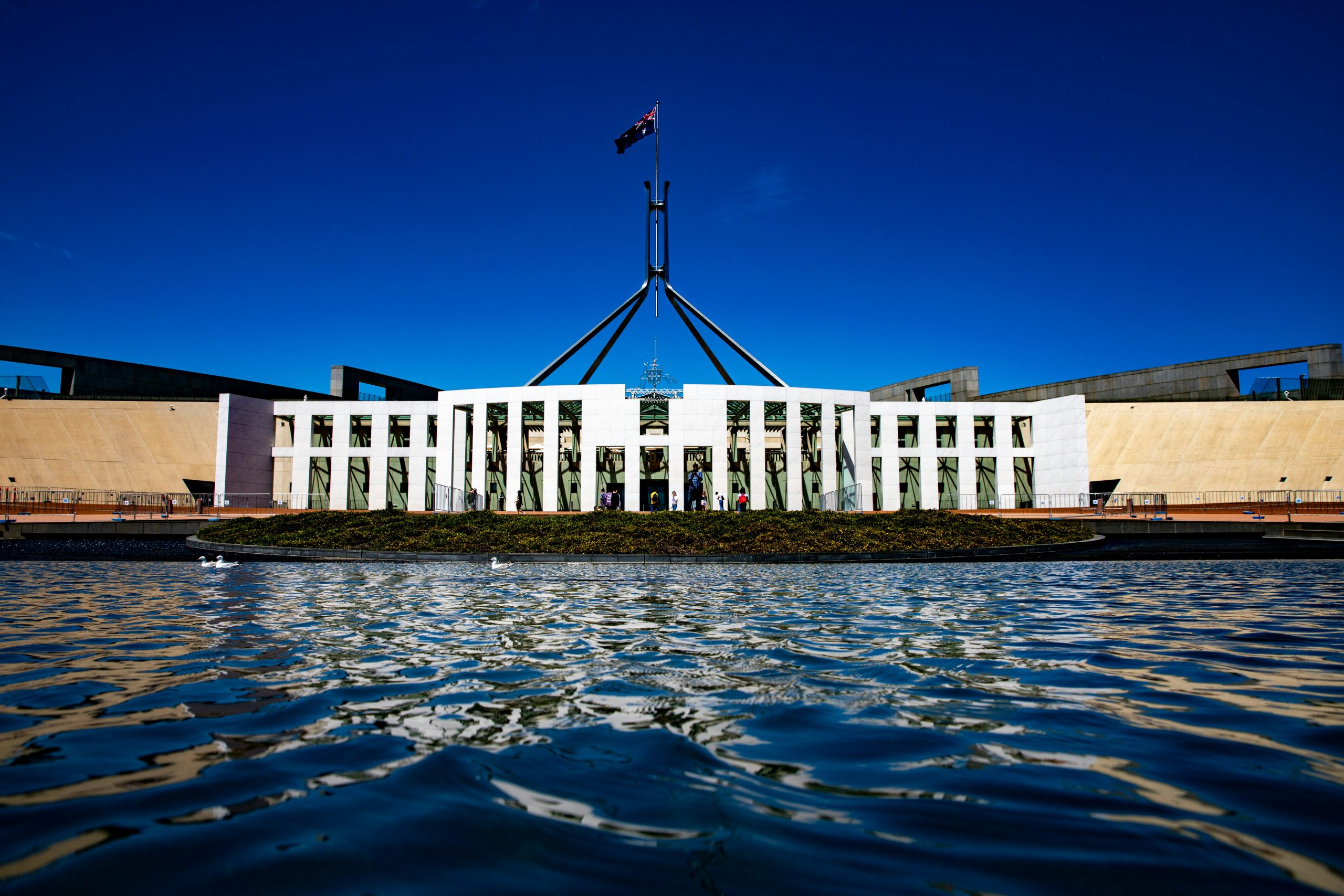
November saw the 50th Anniversary of unarguably one of the most controversial events in modern Australia political history – the then Governor General (John Kerr)’s dismissal of Gough Whitlam as Prime Minister on 11 November 1975.
It is a poignant time to reflect on Gough Whitlam’s legacy and how many of the reforms that he and his progressive government enacted during this short time as Prime Minister continue to reverberate throughout Australia even today.
Before we look at that legacy, a very brief (and very simplified) look at what actually happened during the Dismissal, Australia’s worst constitutional crisis.
A few preliminaries, in the 1970s, the Prime Minister in Australia made recommendations to the Crown (then HRH Elizabeth II) about the appointment of the Governor General, who was essentially, the Crown’s representative in Australia, noting that, as a Constitutional Monarchy, the Crown remains (at least notionally) the Australian Head of State.
Whitlam was the leader of the Labor Party who won government at the 1972 election, having been in the “wilderness” of opposition since the Chifley government lost power to the Menzies-led Coalition government in 1949.
As has happened so many times since, when Whitlam won the 1972 election, he held the majority in the Lower House of Parliament, the House of Representatives, but not in the Upper House, known as the Senate.
During Whitlam’s (shortened) second term as Prime Minister, he appointed John Kerr, a prominent NSW barrister, as the Governor General in July 1974.
Earlier that year, in April, after increasing resistance by the Coalition-majority Senate to pass the bills proposed by Gough’s government into law, Gough announced a “double dissolution” election, which took place on 18 May 1974, in which he hoped to end the Coalition majority in the Senate, which would mean a much smoother passage of Gough’s bills into legislation.
Unfortunately, for Gough and the Labor Party, he was returned to government with a slightly less majority in the Lower House, and no majority in the Senate.
Gough’s government continued to press through some very radical and controversial bills, which again, saw the hostile Senate frustrating a large number of them which ultimately led to the Governor General, who had only been appointed to the position the previous year by Gough, to dismiss Gough Whitlam as the Prime Minister, and to appoint the leader of the Coalition, Malcolm Fraser, as care-taker Prime Minister on 11 November 1975.
In spite of all of these machinations occurring during Gough’s short time as Prime Minister, his government introduced numerous reforms, which were, in many cases, both ground-breaking and before their time, including:
- The introduction of Medibank – a universal, affordable health insurance scheme, which evolved into the Medicare we know today.
- Free university education, which was ultimately abolished by the 1989 Labor Hawke government with the introduction of HECS fees. Free university education saw participation in higher education increased by 25%.
- The establishment of the Family Court and with it, the introduction of no fault divorce in Australia.
- An end to conscription and the end of Australia’s involvement in the Vietnam War.
- The introduction of the Racial Discrimination Act into federal law.
- The introduction of the Trade Practices Act.
- The establishment of Aboriginal land rights.
- The establishment of a National Legal Aid office.
- An end to the death penalty for all federal crimes.
- The introduction of equal pay for women.
- The doubling of federal funding for the Arts, and the creation of the Australian Council for the Arts, as well as the establishment of SBS and Community radio stations.
- The introduction of a range of social welfare payments, including the Supporting Mothers’ Benefit, which helped to empower single mothers and remove the stigma long held by these women.
- The granting of independence to Papua New Guinea.
- The introduction of “Advance Australia Fair” as the national anthem of Australia (which had been “God Save the Queen”) and the introduction of the Order of Australia honours.
- The recognition of China as a nation (which the Coalition Government had refused to do for 24 years).
- The creation of Australia Post and Telecom (which eventually became Telstra).
- The establishment of the Australian Law Reform Commission.
- The introduction of needs-based funding for schools.
- The reduction of the voting age to 18 years (which was previously 21 years).
- The establishment of the Department of Aboriginal Affairs.
This is by no means an exhaustive list, but instead it serves to highlight the achievements of a government whose time in office was cut-short by the untimely and arguably extremely controversial dismissal of one of Australia’s most progressive prime ministers.
About the Author: This article is authored by Jacqueline Brown With over 20 years of experience practicing, Jacqui prides herself on resolving legal matters in the best interest of her clients with due care and sensitivity. As a director of Lynn & Brown Lawyers, she focusses on providing exceptional family law, wills and probate advice. Her thoughtful approach and out-of-the-box thinking allows Jacqui to achieve client-focussed solutions resulting in positive outcomes for her clients.